Tuesday, March 15, 2011
Return to the Ruins of Adventure - Session 20: Thunder and Lightning
The party decides to press on while Mikal takes time to copy down some of the symbols and writings in the tomb.
Proceeding down the hallway the heroes turn a corner and see firelight coming from a room ahead. Approaching, they see a large room with two platforms holding large braziers that light the area with blazing flames. They also see two big ogres in heavy bronze armor and one obvious ogre shaman. Unfortunately their utter lack of stealth means that the ogres see them as well and with shouts("They must not interrupt the king!") they form up in a fighting line and battle commences.
The two armored ogres form up between the brazier platforms, blocking the way forward. Kordan responds by throwing his shield in a spinning arc that smashes one of them in the face before returning to his hand. The shaman standing behind his line of defenders unleashes electric death from his staff, blasting Kordan and Jovanni pretty severely. The bard begins a song of defiance to steady the party's nerves The shaman then calls down a storm over the party, blasting Kordan and Uthal, while Jovanni is hit especially hard.
Sensing that they need to seize the initiative, Uthal charges the ogre line and with his spear manages to push one back, breaking the line. Kordan, battered but unbowed, follows up and brings down the wounded ogre with a deep stab from his sword. Now the battle loosens up as the combatants spread out across the room.
Althea teleports in behind the ogres and watches as her Thunderwave utterly fails to harm them. The big armored ogre also lands a solid hit on Kordan (Revenge!) and he falls to the floor. The shaman unloads a thunderous blast of his own and leaves Althea and Uthal's ears ringing.
Desperate, the party fights with renewed ferocity and Jovanni strikes the killing blow on the Ogre Storm Shaman with one of his magical spells. The lone armored ironclad makes a strangely civilized salute with his mighty maul and then sells his life dearly, buying time for his lord to complete the ceremony begun so long ago.
Pausing for a moment to catch their breath, Althea claims the shaman's staff while Jovanni pulls some gold armbands off of the ogre guards. The heroes then sneak (as best they can) down the hall and take a peek around the corner. The see another decorated room illuminated by the radiance from a large pool of smoky grey-black vaporous energy. They realize this is likely the opening to the shadowfell they were sent to locate and destroy. A huge armored ogre zombie stands before the pool, and a loud chanting can be heard coming from somewhere behind the pool. As Mikal comes hustling up they realize this is the end of their quest and they prepare for the battle that is likely to come.
DM Notes: So much for working in more encounters. The warlock's player couldn't make it so we left him in the previous room studying the tomb paintings. Much time was spent catching up after a 2-week layoff and I didn't push especially hard as I wanted everyone to be present for the final battle if possible. As it turned out the fight with the shaman and the guards went a full 10 rounds, so it ate up quite a bit of time anyway. It was a good fight, as most of them are in 4E at this point, and no one seemed terribly put out by only working in one encounter for the night.
Next session: The final confrontation with the Ogre King!
Monday, March 14, 2011
Games and Expansions: A Tipping Point
James at Grognardia had a retrospective on Car Wars a while back and it prompted me to go dig my box-o-car-wars out of the garage (I was digging out some old D&D stuff too). Looking through it, and at my dusty piles from a few other games a thought occurred to me.
The pocket box Car Wars (circa 1983) had a 24-page 4" X 8" rulebook. Within those pages there were the complete rules for the game including pedestrians and continuing characters (pages 1-19) and 5 pages of vehicle construction rules including 7 body types, 4 chassis strengths, 4 power plants, suspensions, and 4 types of tires. On an additional play sheet were the tables and charts for the game - crash results, hazards, the 7 types of weapons, and some other accessories for the cars like targeting computers, turrets, and fire extinguishers. As you might imagine, this meant that there was a lot of customization possible to try new combinations of weapons vs. armor vs. speed and turreted vs. front-mounted vs. broadsides - it was a small but rich environment for tinkering and experimentation and it was pretty popular.
Over time the line grew with a quarterly magazine (Autoduel Quarterly), annual new equipment supplements (Uncale Albert's Auto Stop and Gunnery Shop Mail-Order Catalog), annual new car designs compilations (AADA Vehicle Guides) and some bigger supplements like Sunday Drivers (Characters and terrain), Truck Stop (the first serious escalation bringing in 18-wheelers, buses, and things like Tank Cannons) and Dueltrack that brought in gasoline engines to the previously simple all-electric car design. Pretty soon there were boxed supplements covering boats, planes, trikes, trailers, hover craft, racing vehicles, helicopters, hovercraft, and eventually tanks! By 1990 we had the "Car Wars Compendium" that was full sized, 112 pages long and included rules for all of those in one volume of which 49 pages were playing rules and the rest was mostly design rules. Even then, we clearly didn't have enough "stuff" so by 1992 we have "Uncle Albert's Catalog from Hell" which is 208 pages of equipment and design rules including new goodies such as airships, armored personnel carriers, armored cars, and self-propelled artillery!
All of these supplements had taken the game so far from the original "couple-of-guys-strapping-a-machinegun-to-the-hood" concept that it was just fantastical now. X-Ray Lasers mounted in universal pop-up turrets with cyberlinked targeting systems supplemented by radar-guided missiles and fireproof laser-reflective armor turned it from a charming little game to play with friends into a competitive min-maxing environment with arguments over errata and minutia bogging down games and convention play mostly revolving around seeded tournaments with car designs optimized to four decimal places rather than open play arenas using published designs.
Any of that sound familiar? I think it describes D&D 3rd edition fairly well. Battletech fits the pattern to a degree too. Oddly enough I don't think it really fits 4th edition D&D or Star Fleet Battles.
I think that in any game with a construction system or building element that the progression of supplements and rules updates that add options to that system will inevitably lead to a tipping point where many of the people involved in the game spend more time building and optimizing to find the "best" design than they spend time actually playing the game.
Car Wars is the first game where I saw this happen and I hated it. Battletech suffered from it later, Warhammer suffers from it now, and even Hero system games are affected by it to some degree. Some of the warning signs include a point system for building units, multiple supplements devoted to adding new parts, and the insistence among serious players that a computer design tool is "essential".
Battletech kept a much tighter lid on it even though mech design was one of the major attractions of the game. From 1985 up to about 1989 there was minimal equipment expansion (Citytech being the main one and even it mostly filled in gaps in between existing weapons) but once the Clan Invasion hit it alienated many of the players by introducing a whole separate set of different and clearly better technology. This caused a split between fans that for some has lasted until the present day. Try to jump in now and a new player is confronted with pages and pages of weapons and armor and equipment options. Find a copy of the old box or the newer starter box (a good move by the current publishers) and you're back to 10 or 12 different weapons systems, 10 or 12 different chassis sizes, and basic armor and engines and you're back to a small-scale fun game that can actually be played in an hour or less without agonizing over design for hours beforehand. You don't even need a computer program to design your own mech.
Star Feet Battles in contrast is another complex popular in the 80's boardgame that never really suffered this problem. No design rules were ever published. New ships and races and weapons were introduced to the game over time but the publisher kept the design rules in-house so that the focus of the game has always been on playing rather than designing the perfect ship. Mastering the rules and how different ships fight is a big part of playing the game (and the tournaments, not that I've ever been a big tournament guy for any game) and that can only be gained through actually playing the game, not through running iteration after iteration of your ship through a spreadsheet until you have the perfect design.
I think some RPG's have experienced the same problem. Hero was probably the first as its system makes this kind of thing possible. GURPS has a little of this with figuring stats vs. skills vs. advantages and disadvantages. Prior to 3rd Edition you really didn't hear about "builds" in D&D. There wasn't really a system within the game that allowed for this. Sure, a lot of people aimed for the Gauntlets/Girdle/Hammer of Thunderbolts combo but magic items were about the only thing one could shoot for within the system to "optimize" a character. Now once 3E came along and applied more rigorous math to the game, added feats that had mechanical elements to the game, and allowed unlimited per-level multi-classing, that's when the optimization started. As more and more of these elements were added, including prestige classes, the interactions multiplied with every book, creating even more fodder for the ruthless weeding-out of inefficiency and finding the "correct" path.
Interestingly 4th Edition is less susceptible to this in my opinion. Sure it has point allocation as the primary way to generate ability scores and it does have feats but it has very limited multiclassing and only allows one choice of Paragon Path and Epic Destiny. Also the math is tighter for the whole game which tends to level things out at each ... level. By limiting the number of "buildable" elements it helps control the focus on optimal builds and the number of interactions that must be checked. Most other RPGs, especially non-point-build games seem to have a similar handle on it whether it's Runequest or Star Wars or Savage Worlds.
It happens in miniatures games too. Warhammer and 40K tend to have fierce internet debates over the perfect elements to include in one's army, and the mix of those elements changes with each new edition of the game. The number of people discussing optimization is greater than the number of people actually playing the game, often by straight-up admission of those same posters! Compare this to DBA, an ancients game that's been around for roughly 20 years where each army consists of 12 elements chosen from a limited number of types. There is very little debate over composition, at least in the sense of "what's more efficient" while there is a lot of discussion of playing, base sizes, how to represent various forms of terrain - actual gaming elements rather than theoretical exercises in discovering the 'best". Even the more open system of Hordes of the Things, the fantasy version of the same system, tends to have more discussion over how to best represent certain things in the game rather than how to build the killer force.
I think the key is not even really rules bloat - it's the number of customizable or constructible elements in the game, especially those added after the game is created that tends to skew things over to the building rather than the playing as those later elements tend to be less tested than the originals. There's a point where a game achieves a nearly perfect balance among its elements to where there is no "best" solution for all problems. The problem is that companies rarely stop at that point. the temptation to keep adding new stuff to the game is too great, and inevitably things are introduced that are clearly better or worse than others and disrupt this balance in the system. Once it becomes clear that certain elements are just better than others, the race begins. Much of the focus around the game shifts from playing to setting up and the game starts to die. The internet has actually made this worse in some ways as thousands of players around the world quickly determine the optimum configuration for various situations and even casual players start to disdain certain units or elements or combinations as suboptimal.
What's the downside? Well, a vocal online player base that's more concerned with counting rivets than actually playing the game for one. Heated arguments that start to paint the game's "players" as hardcore or unwelcoming to newcomers. A push to add more to the game because analysis has narrowed the "real" options down to a mere handful of what was put in the game originally and players want more choices. Rules bloat, supplement overkill, multiple compilations of prior products being released as new products - these tend to alienate customers as well.
How to avoid it? Car Wars measured multiple factors for each element: Spaces (a car can only hold so many systems), Weight (weight slows down the car and there is a limit), and Money (effectively the point system in many ways) were factors in building a vehicle while to-hit numbers, damage dice, and number of shots were factors during combat. Now this gives a ton of design flexibility - some elements might be cheaper but heavier while others might be more accurate but do less damage - but I think it's too many to really track when designing a game intended to be expanded. Some of those factors mean nothing in certain conditions. There are systems that mitigate high to-hit numbers. Special ammo can boost damage. Some vehicles can carry so much weight that it ceases to be a real limiting factor. Battletech handled it better in some ways by making weight an overriding factor and spaces consumed a less important factor while money was not even a consideration in the basic game (It's a huge concern in the RPG which adds an interesting element to the game without busting up the initial balance found in the boardgame rules). In combat range and damage are the main considerations which works well. DBA costs each unit the same but each one is better under certain conditions - the trick is arranging those conditions which is something that can only happen in play, again keeping the focus on the game and not the point costs found in the construction appendix at the back of the book!
Some will tout the value of a point based construction system and sometimes it is a good idea but it is not the universal solution. 2nd edition Warhammer actually included a point system for constructing and costing individual miniatures in the game (something removed from later editions) but it also included a warning that it will not be perfect. The example they gave was say you developed a creature that has Strength 10, Toughness 10, and Attack Skill of 10, but a Movement ability of 0 (10 was the highest rating in the game, 1 would be the lowest and 0 would indicate no capability in an area). How would one cost that? If it gets charged by an enemy, then it's going to absolutely vicious in combat. If it's opposed by a force of archers it's going to eventually die (or be avoided) without inflicting a single casualty n the enemy. You can come up with similar scenarios in nearly any point-based game. Champions 4th edition had some particularly good examples as well so I'm not just talking about board games here. Points can be useful but there are always extremes which can be exploited to break the system, meaning it's not an absolute fix.
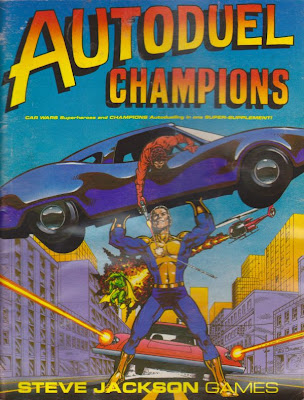
The most effective solution I have found for a board game is to make it a role-playing game. Playing 3055 era Mechwarrior in a vacuum is a very different experience from playing it as part of a mercenary unit that has to pay for all of that equipment - suddenly all those Gauss Rifles and Pulse Lasers disappear in favor of less efficent but cheaper weapons. Same with Car Wars - building a teched out Division 100 laser sled is fun and all, but if you have to fix it up after the battle you better hope there's enough prize money to make it worth your while. Start down at Division 5 or 10 and you have a lot more options and smaller repair bills.
For RPG's the key is to make theoretical designs just that - theoretical. Want to multiclass from fighter into cleric then into rogue? Better find a temple that will have you and then a guild that will trust you too. Playing a dwarf and planning to take Deepwoods Sniper? That's kind of an Elf thing and you've been playing grumpy scottish tree-hugger-hating longbeard, so how exactly are you going to get in? Sure Frenzied Berserker is awesome but they're only found up amongst the Frost, Ice, and Snow Barbarians and we're adventuring down in the Amedio Jungle so how are you going to pick that up? We're playing in the Realms and you want to pull in a race from Eberron? No. Playing Fantasy Hero and you want your wizard to use a variable power pool for his magic? No, you're not Green Lantern. Hardcore optimizers sneer at this kind of stuff but to me it's the difference between an RPG and a board game or card game - the universe of all possibilities is a theoretical one, not one found in any particular campaign. In many ways RPG campaigns are defined by what subset of the game they embrace, not how many different books you can use to max out your damage bonus with the Impilturian Greatsword when fighting underground and wearing a holy symbol of Cyric..
As for Car Wars The militarization of the game was disappointing to me as originally this was a light, fast, interesting little tactical game with some roleplaying elements if you wanted them. I didn't need another game featuring tanks and SPA - I already had a ton of those! For me the game collapsed under its own weight about 1990 and I haven't played it in most of 20 years. However, the discussion and research on it has triggered some interest with me in going back to the basics. I really like the way everything is presented as an in-universe document, something we wouldn't see again until 1989 and Shadowrun. I think I'm going to get out the pocket box game with the apprentices and run a small arena fight and see what they think. All these years later I don't feel as compelled to use everything ever published for a game so we'll stick to the basics and spend an afternoon shooting holes in cars. Sounds like fun to me.
![]() |
| Where it started...a classic |
The pocket box Car Wars (circa 1983) had a 24-page 4" X 8" rulebook. Within those pages there were the complete rules for the game including pedestrians and continuing characters (pages 1-19) and 5 pages of vehicle construction rules including 7 body types, 4 chassis strengths, 4 power plants, suspensions, and 4 types of tires. On an additional play sheet were the tables and charts for the game - crash results, hazards, the 7 types of weapons, and some other accessories for the cars like targeting computers, turrets, and fire extinguishers. As you might imagine, this meant that there was a lot of customization possible to try new combinations of weapons vs. armor vs. speed and turreted vs. front-mounted vs. broadsides - it was a small but rich environment for tinkering and experimentation and it was pretty popular.
![]() |
| Very cool at the time but a harbinger of things to come |
Over time the line grew with a quarterly magazine (Autoduel Quarterly), annual new equipment supplements (Uncale Albert's Auto Stop and Gunnery Shop Mail-Order Catalog), annual new car designs compilations (AADA Vehicle Guides) and some bigger supplements like Sunday Drivers (Characters and terrain), Truck Stop (the first serious escalation bringing in 18-wheelers, buses, and things like Tank Cannons) and Dueltrack that brought in gasoline engines to the previously simple all-electric car design. Pretty soon there were boxed supplements covering boats, planes, trikes, trailers, hover craft, racing vehicles, helicopters, hovercraft, and eventually tanks! By 1990 we had the "Car Wars Compendium" that was full sized, 112 pages long and included rules for all of those in one volume of which 49 pages were playing rules and the rest was mostly design rules. Even then, we clearly didn't have enough "stuff" so by 1992 we have "Uncle Albert's Catalog from Hell" which is 208 pages of equipment and design rules including new goodies such as airships, armored personnel carriers, armored cars, and self-propelled artillery!
![]() |
| I absolutely loved this book, as you might guess from the amount of wear on the cover |
All of these supplements had taken the game so far from the original "couple-of-guys-strapping-a-machinegun-to-the-hood" concept that it was just fantastical now. X-Ray Lasers mounted in universal pop-up turrets with cyberlinked targeting systems supplemented by radar-guided missiles and fireproof laser-reflective armor turned it from a charming little game to play with friends into a competitive min-maxing environment with arguments over errata and minutia bogging down games and convention play mostly revolving around seeded tournaments with car designs optimized to four decimal places rather than open play arenas using published designs.
![]() |
| Where we ended up a few years down the road |
Any of that sound familiar? I think it describes D&D 3rd edition fairly well. Battletech fits the pattern to a degree too. Oddly enough I don't think it really fits 4th edition D&D or Star Fleet Battles.
I think that in any game with a construction system or building element that the progression of supplements and rules updates that add options to that system will inevitably lead to a tipping point where many of the people involved in the game spend more time building and optimizing to find the "best" design than they spend time actually playing the game.
![]() |
| A very cool supplement for playing the game solo - it was even better with a referee |
Car Wars is the first game where I saw this happen and I hated it. Battletech suffered from it later, Warhammer suffers from it now, and even Hero system games are affected by it to some degree. Some of the warning signs include a point system for building units, multiple supplements devoted to adding new parts, and the insistence among serious players that a computer design tool is "essential".
![]() |
| Remember when game mags went for less than 5$? |
Battletech kept a much tighter lid on it even though mech design was one of the major attractions of the game. From 1985 up to about 1989 there was minimal equipment expansion (Citytech being the main one and even it mostly filled in gaps in between existing weapons) but once the Clan Invasion hit it alienated many of the players by introducing a whole separate set of different and clearly better technology. This caused a split between fans that for some has lasted until the present day. Try to jump in now and a new player is confronted with pages and pages of weapons and armor and equipment options. Find a copy of the old box or the newer starter box (a good move by the current publishers) and you're back to 10 or 12 different weapons systems, 10 or 12 different chassis sizes, and basic armor and engines and you're back to a small-scale fun game that can actually be played in an hour or less without agonizing over design for hours beforehand. You don't even need a computer program to design your own mech.
| Still the coolest mech in the game |
Star Feet Battles in contrast is another complex popular in the 80's boardgame that never really suffered this problem. No design rules were ever published. New ships and races and weapons were introduced to the game over time but the publisher kept the design rules in-house so that the focus of the game has always been on playing rather than designing the perfect ship. Mastering the rules and how different ships fight is a big part of playing the game (and the tournaments, not that I've ever been a big tournament guy for any game) and that can only be gained through actually playing the game, not through running iteration after iteration of your ship through a spreadsheet until you have the perfect design.
![]() |
| Why Romulans need a cloaking device |
I think some RPG's have experienced the same problem. Hero was probably the first as its system makes this kind of thing possible. GURPS has a little of this with figuring stats vs. skills vs. advantages and disadvantages. Prior to 3rd Edition you really didn't hear about "builds" in D&D. There wasn't really a system within the game that allowed for this. Sure, a lot of people aimed for the Gauntlets/Girdle/Hammer of Thunderbolts combo but magic items were about the only thing one could shoot for within the system to "optimize" a character. Now once 3E came along and applied more rigorous math to the game, added feats that had mechanical elements to the game, and allowed unlimited per-level multi-classing, that's when the optimization started. As more and more of these elements were added, including prestige classes, the interactions multiplied with every book, creating even more fodder for the ruthless weeding-out of inefficiency and finding the "correct" path.
![]() |
| C'mon, it's only 800 pages of rules! |
Interestingly 4th Edition is less susceptible to this in my opinion. Sure it has point allocation as the primary way to generate ability scores and it does have feats but it has very limited multiclassing and only allows one choice of Paragon Path and Epic Destiny. Also the math is tighter for the whole game which tends to level things out at each ... level. By limiting the number of "buildable" elements it helps control the focus on optimal builds and the number of interactions that must be checked. Most other RPGs, especially non-point-build games seem to have a similar handle on it whether it's Runequest or Star Wars or Savage Worlds.
![]() |
| OK I've narrowed my army down to this... |
It happens in miniatures games too. Warhammer and 40K tend to have fierce internet debates over the perfect elements to include in one's army, and the mix of those elements changes with each new edition of the game. The number of people discussing optimization is greater than the number of people actually playing the game, often by straight-up admission of those same posters! Compare this to DBA, an ancients game that's been around for roughly 20 years where each army consists of 12 elements chosen from a limited number of types. There is very little debate over composition, at least in the sense of "what's more efficient" while there is a lot of discussion of playing, base sizes, how to represent various forms of terrain - actual gaming elements rather than theoretical exercises in discovering the 'best". Even the more open system of Hordes of the Things, the fantasy version of the same system, tends to have more discussion over how to best represent certain things in the game rather than how to build the killer force.
I think the key is not even really rules bloat - it's the number of customizable or constructible elements in the game, especially those added after the game is created that tends to skew things over to the building rather than the playing as those later elements tend to be less tested than the originals. There's a point where a game achieves a nearly perfect balance among its elements to where there is no "best" solution for all problems. The problem is that companies rarely stop at that point. the temptation to keep adding new stuff to the game is too great, and inevitably things are introduced that are clearly better or worse than others and disrupt this balance in the system. Once it becomes clear that certain elements are just better than others, the race begins. Much of the focus around the game shifts from playing to setting up and the game starts to die. The internet has actually made this worse in some ways as thousands of players around the world quickly determine the optimum configuration for various situations and even casual players start to disdain certain units or elements or combinations as suboptimal.
What's the downside? Well, a vocal online player base that's more concerned with counting rivets than actually playing the game for one. Heated arguments that start to paint the game's "players" as hardcore or unwelcoming to newcomers. A push to add more to the game because analysis has narrowed the "real" options down to a mere handful of what was put in the game originally and players want more choices. Rules bloat, supplement overkill, multiple compilations of prior products being released as new products - these tend to alienate customers as well.
How to avoid it? Car Wars measured multiple factors for each element: Spaces (a car can only hold so many systems), Weight (weight slows down the car and there is a limit), and Money (effectively the point system in many ways) were factors in building a vehicle while to-hit numbers, damage dice, and number of shots were factors during combat. Now this gives a ton of design flexibility - some elements might be cheaper but heavier while others might be more accurate but do less damage - but I think it's too many to really track when designing a game intended to be expanded. Some of those factors mean nothing in certain conditions. There are systems that mitigate high to-hit numbers. Special ammo can boost damage. Some vehicles can carry so much weight that it ceases to be a real limiting factor. Battletech handled it better in some ways by making weight an overriding factor and spaces consumed a less important factor while money was not even a consideration in the basic game (It's a huge concern in the RPG which adds an interesting element to the game without busting up the initial balance found in the boardgame rules). In combat range and damage are the main considerations which works well. DBA costs each unit the same but each one is better under certain conditions - the trick is arranging those conditions which is something that can only happen in play, again keeping the focus on the game and not the point costs found in the construction appendix at the back of the book!
![]() |
| Of course point systems simplify things |
Some will tout the value of a point based construction system and sometimes it is a good idea but it is not the universal solution. 2nd edition Warhammer actually included a point system for constructing and costing individual miniatures in the game (something removed from later editions) but it also included a warning that it will not be perfect. The example they gave was say you developed a creature that has Strength 10, Toughness 10, and Attack Skill of 10, but a Movement ability of 0 (10 was the highest rating in the game, 1 would be the lowest and 0 would indicate no capability in an area). How would one cost that? If it gets charged by an enemy, then it's going to absolutely vicious in combat. If it's opposed by a force of archers it's going to eventually die (or be avoided) without inflicting a single casualty n the enemy. You can come up with similar scenarios in nearly any point-based game. Champions 4th edition had some particularly good examples as well so I'm not just talking about board games here. Points can be useful but there are always extremes which can be exploited to break the system, meaning it's not an absolute fix.
![]() |
| An awesome supplement - we should have more books like this |
The most effective solution I have found for a board game is to make it a role-playing game. Playing 3055 era Mechwarrior in a vacuum is a very different experience from playing it as part of a mercenary unit that has to pay for all of that equipment - suddenly all those Gauss Rifles and Pulse Lasers disappear in favor of less efficent but cheaper weapons. Same with Car Wars - building a teched out Division 100 laser sled is fun and all, but if you have to fix it up after the battle you better hope there's enough prize money to make it worth your while. Start down at Division 5 or 10 and you have a lot more options and smaller repair bills.
For RPG's the key is to make theoretical designs just that - theoretical. Want to multiclass from fighter into cleric then into rogue? Better find a temple that will have you and then a guild that will trust you too. Playing a dwarf and planning to take Deepwoods Sniper? That's kind of an Elf thing and you've been playing grumpy scottish tree-hugger-hating longbeard, so how exactly are you going to get in? Sure Frenzied Berserker is awesome but they're only found up amongst the Frost, Ice, and Snow Barbarians and we're adventuring down in the Amedio Jungle so how are you going to pick that up? We're playing in the Realms and you want to pull in a race from Eberron? No. Playing Fantasy Hero and you want your wizard to use a variable power pool for his magic? No, you're not Green Lantern. Hardcore optimizers sneer at this kind of stuff but to me it's the difference between an RPG and a board game or card game - the universe of all possibilities is a theoretical one, not one found in any particular campaign. In many ways RPG campaigns are defined by what subset of the game they embrace, not how many different books you can use to max out your damage bonus with the Impilturian Greatsword when fighting underground and wearing a holy symbol of Cyric..
![]() |
| It's surprising how much of an RPG it turned into near the end |
![]() |
| Cars from the State Fair of Texas 2037 |
Friday, March 11, 2011
The Achaean Age Campaign - Session 1: A Final Obligation
We open in the great coastal city of Argos. Argos is the main port for travel and trade with the island of the minotaurs and is quite prosperous. It is also the favored city of Posiedon, which doesn't hurt either. Three of our party members are newly arrived from Minos (Crete) and have spent their first day in town looking for equipment for exploration and travel. Talking with a like-minded Artificer they met in the agora, they are approached by a slave from the temple of Hephaestus. Jordon, the Artificer, knows him and welcomes him to the table.
The slave has bad news - the last priest of Hephaestus in the city has died and his final wish is to be buried in the shrine of the smith god outside of town. The slave knows where it is but no one has gone there in decades and the countryside is crawling with bandits and monsters. He knows he would never make it alone and asks Jordon (and his friends) if they would escort him on this journey. After a brief discussion the party agrees and they plan to meet at the main landside gate at dawn the next day.
Meeting up without incident the group sets forth, 4 adventurers and a slave pulling a cart with the body of his former master. The shrine is about a day's travel away and for the first hour things are uneventful as they follow the main road north, which is now in a sad state of disrepair. Then a pair of ragged-looking men step out of the woods on either side of the road and signal them to halt. The bandits then demand payment or they will attack. The party refuses as all good Acheans should and the fight is on.
The two bandits find themselves quickly outmatched when they are rushed by Spartakos the warrior and Jaak the minotaur berserker. Then 5 more bandits step out and hurl javelins and for a moment things appear to be more even. That's when Kettenbar charges them as Jordon unleashes some of his magical concoctions and in a short one-sided fight the bandits are slain to a man.
The heroes take a short break, toss the bodies to the side of the road - scum like these do not deserve burials like honorable men - and continue on their journey. Hours later as the sun sinks low they spot the shrine ahead.
It is a simple stone construction - a raised stone platform with columns surrounding a central altar. It appears it might once have had a roof but it does not any longer. The whole thing is set in a quiet open area though the grass and scrub are brown and withered despite the onset of spring. Approaching cautiously they realize the shrine is not uninhabited.
Atop the platform they spot 1...2...3...4 scorpions! Man-sized scorpions! Briefly discussing a plan the heroes decide to open fire with missiles and let the beasts come to them. Spartakos heaves a Javelin at them, while Jordon pulls a man-like framework off of the cart and sends it marching towards the shrine. Jaak charges, clearly understanding the plan. Shrugging, Kett charges after him.
Jaak reaches the steps of the shrine and is seized by one of the beasts, discovering that besides being man-sized these things' claws generate some kind of lightning effect, blasting him even as he is caught in their grip - Stormclaw Scorpions! Could they be a divine agent of some kind?
The rest of the party charges forward to support the minotaur and a melee fight breaks out along the steps of the shrine wit hall four scorpions engaging all 4 heroes as the slave guards his master's body. Jaak breaks free as hits are given and taken between the two sides. Spartakos comes around one side of the steps and rams his spear up into the softer underside of the one scorpion, slaying it. Jaak and the automaton team up on another one, killing it as well. Jordon blasts one with a cold blast then Jaak goes berserk and kills it and cleaves into another, setting it up perfectly for Kett who plunges his fullblade into the thing's back, ending the fight.
After catching their breath, Jordon mentions that the traditional burial place for priests is somewhere under the shrine. He fiddles with the stone altar and finds a movable block, which allows the altar to slide back smoothly, revealing a stone stairway down into darkness. After discussing options the heroes slide the altar back into place, deciding to rest for a night and venture downward in the morning.
DM Notes: This was fun and the boys really got into it, working together fairly well and not arguing at all. Normally I like to give players multiple choices when it comes to adventuring options but to start this off I wanted to take a firmer hand, thus the slave's request for aid. The artificer's divine connection to Hephaestus played right into this so it was a done deal from the start. It also emphasizes the decline of the gods in the region which will be a theme for the campaign, at least early on.
The combats were short and clean, lasting 3 rounds and 5 rounds respectively and not a kobold in sight! We were all pretty happy with the game and are looking forward to the next run sometime after spring break.
Thursday, March 10, 2011
The Achaean Age Campaign - Session 0: Set Sails!
Well we managed to get the Greek mythology campaign started over the weekend and it went pretty well. Once again Apprentice Red and Apprentice Blaster stepped up to take the plunge after agreeing to scrap the Impiltur campaign to do it and after almost choosing 1st edition TOEE they decided they wanted to play 4th this weekend, specifically the mythological campaign.
I set some pretty limiting guidelines (only Humans, Minotaurs, Automatons (warforged), and Wilden for races, no Primal classes) and let them make up two characters each. Not monitoring them closely I was a little surprised when Blaster came back with two fighters, one human and one minotaur. Red came in with an artifcier (human) and a wilden avenger, which are fine, but I told Blaster that next session he's not bringing two of the same class.
This also caused me to review the rules on companion characters in the DMG 2. These are the rules for player-controlled NPC's in this edition so they're basically 1E henchmen. The rules look pretty good so this is what I'm going to do next session: allow each player only 1 character, but allow them to also bring 1 companion along as well. I may also let them have some minions too.
The reason I do this is the source material. From the original Odyssey and Iliad to the Argonauts to Clash of the Titans, the heroes of Greek myth tend to be surrounded by nameless spear-carriers who die like Star Trek redshirts to illustrate the danger to the hero. Some games like AD&D, GURPS, and Savage Worlds have mechanics for this when creating a character and even 3rd Edition D&D had the leadership feat. The new edition does not really have mechanics for acquiring sidekicks but it does have mechanics for building simplified NPC-types so I'm going to use them. I think each hero is going to have 1 "sidekick" type companion and a renewable band of expendable minions -if they want them- to accompany them on their journeys. This should add to the flavor and make it feel that little bit more distinctive from standard D&D.
But that's for next time. This session we begin with 4 characters:
Spartakos, Human Guardian Fighter who is strong, tough, and was raised by Minotaurs on the island kingdom of Minos.
Jaak, Minotaur Battlerage Fighter who is even stronger and is very nasty in battle even though he was raised as a farmer.
Jordon, Human Artificer who is very smart and was blessed by Hephaestus - clearly he is destined for great things. He also uses some outlandish weapon he calls a "hand crossbow" that may be unique amongst all Achaea*
Kettenbar, the Wilden Avenger of Pan**, who is wise and skilled in the ways of the natural world.
We decided that Jaak's family had raised Spartakos from childhood and that Kettenbar had been on the island as well, training with minotaur tutors in the ways of the greataxe. They decided to head to the mainland for adventure and to see the rest of the world and encountered Jordon when they were looking into magical weapons before heading out into the countryside, and this is where Session 1 will pick up.
*Yeah I forgot to put "No crossbows" in my instructions to them and he really wanted it so I decided the gadget-builder class would have one if anyone would. I let him keep it.
** He started off with Ares then I asked him if he really wanted his plant-like character to be tied to the war god. We talked a bit and he decided to go for Pan. I decided that was OK as Pan strikes me as the type of god that would have a lot of descendants, especially Wilden descendants, even among the Olympians. I mean when you eventually get tired of playing your pipes, you look around and see all these wood and water nymphs hanging around, well...
Wednesday, March 9, 2011
Megadungeon Awakening
So after thinking about it a bit I made some decisions:.
- 1st Edition AD&D will remain as an option with Temple of Elemental Evil ready to go, but it's not the "Mega" campaign
- 2nd Edition AD&D will be on the bench with Greyhawk Ruins ready to go. Looking through it again (first time in probably 10 years) I am a lot more impressed with it than I was. More on that later.
- If someone wants to try one in 4th Edition, well, since I'm already running in the Realms then I will use Undermountain. Not doing a lot of planning on it right now but it is an option.
So the final solution is to place the Megadungeon in my Dragonport campaign, where we're already doing some Basic/Expert adventuring anyway. I had already outlined a location known to be where the King of the Stone Giants rules - Skullcrusher Mountain! Added partly as an in-joke due to the song that the apprentices and I love so much (especially in Rock Band) it now will take on a somewhat more important role. I have ideas for several levels and monster groups within and I will put out more about it in a different post. We may not touch it for some time but that means I'm not under any pressure to get that first part mapped out. I consider it my training effort so I'm going to go fairly slow.
One other good thing is that the brain cycles spent on it have led me to think that it's really would not be that hard to do for 4E either. I think the core of the megadungeon experience is exploring, fighting, and sneaking through hoping to not have to start fighting, and 4E can handle those just fine. A lot of the crazy stuff from the earliest days like gates to other planes and pocket universes would work just fine with 4E. Anyway, I'm getting ahead of myself as that's at best the second one down the road.
Now that I have a place and a system I can start getting the concrete parts down and actually think about running it. Time to dig out the graph paper.
Tuesday, March 8, 2011
Return to the Ruins of Adventure - Session 19: Hulk Smash!
Picking up where we left off the party is exploring a chamber in the tomb of the ogre king far beneath the ruins of Phlan when orcs and ogres in archaic armor and dress materialize out of thin air and begin attacking.
Three ogres and three orcs appear in the room and rush the party. Scattered throughout the room the team is vulnerable and things look pretty dangerous. Two ogres charge the fighter, while another engages Mikal who is all by his lonesome at the other end of the room. The orcs move in to support their brethren and combat breaks out all over.
The orcs go down fairly quickly but the ogres are much tougher customers and the fight goes on for some time. gradually the newcomers are beaten down and slain but it's not an easy fight. After pausing to bind their wounds, the party opens the inner door and moves down a hallway of worked stone.
Emerging into a new chamber the party sees a huge ogre berserker and two ogre spearmen, apparently laying in wait for them and a fight breaks out before the team can even enter the room. The big ogre blocks the doorway, pounding on Kordan and Uthal, while his allies throw javelins really hard at the rest of the party. The fighter manages to knock the huge beast down at one point but it recovers and then in a devastating whirlwind attack with its flail knocks almost the entire party down, severely injuring some of them. Things appear grim as the rampaging brute continues to assail Kordan but mighty magics are unleashed and the party recovers, pushing back into the room and blasting the ogres into oblivion.
This new chamber features a huge skull mosaic inlaid into the floor, the symbol of an ancient ogre god, long ago devoured by Bane. Two huge braziers of everburning flame light the room and a passage leads out into unknown darkness.
DM notes: There was less setup this time and more straight-up combat. Both fights went for 8 rounds and were very exciting (ogre warhulks in confined spaces are fun) but there's not a whole lot else to tell. There is a trap and a curse in the room but they did not have a huge effect on the fight. It's still only 2 encounters but maybe next time we will make it to 3.
Monday, March 7, 2011
Megadungeon Dreams
It's something that afflicts many of us even after decades away from the core of the game it represents. Even after disastrous episodes with near-megadungeons in 3rd edition it still calls. It causes us to go search through the garage and dig out that Undermountain boxed set, that copy of Greyhawk Ruins, those scattered handwritten pieces of graph paper and think about those campaigns that never quite got off of the ground, and wonder...
So I've decided to start writing it down. Ideas for monster and levels and parts of levels have started to appear in my brain lately and I need to put them somewhere else. Some of the notes will show up on the blog - when I feel like I have something worth sharing anyway. Some points:
Why not run one I already own? Greyhawk Ruins is 26 linked levels of dungeon that I never got to actually run and I probably still have my notes on it in a binder somewhere. . It's even written for 2E, still old-school enough to run quickly and feel different from 4E. I still might do this, just to have a drop-in option with the Apprentices' tricky schedules.
But...I have found recently that developing your own area of play means that you don't have to worry about contradicting stuff someone else wrote, or forgetting about the secret door that links Level X to Secret Level Y, or just keeping up with the details that someone else wrote.I ran into this a lot running Tomb of Abysthor and Return to the Temple of Elemental Evil where a lot of the details were hard to spot and tricky to keep in mind in the heat of play. Undermountain has the same problem in that it has a ton of mapping done, but only part of the levels are detailed, so I'd be going in and filling out someone else's map - in some ways the worst of both worlds. For myself, stuff that I write makes sense to me and means I'm not going to lose track of it during the game, so I'd like to write it myself.
Plus there is the challenge factor - it's something I haven't done before, so let's try it.
There is also the ownership factor - if I write it from scratch it's mine, no one else/s - no apologies, no remorse.
Now what system would I use? Clearly some version of D&D is called for, though I might be able to scratch my Greek itch by using Mazes and Minotaurs instead. Seems kind of silly though to finally sit down and do a megadungeon after all these years and make it for a different game system. Maybe if I used Mazes & Minotaurs creatures but used the Undermountain maps...
Anyway, system: Probably not 4th edition as combat is too complex to really get the old-school MD feel. Basic D&D/Labyrinth Lord is a little simple and I already have a game of that going anyway. I could do 1st Edition but I was kind of wanting to run them through Temple of Elemental Evil then Against the Giants then the Drow adventures if we sat down to do that. Heck, 2nd edition may win out here after all.
And yes, the Apprentices (and Lady Blacksteel) have been fully outfitted with a copy of Basic D&D (Moldvay), 1st edition PHB (Wizard cover because that's what I found for sale), 2nd edition PHB (rider cover because that's what I found), 3rd edition PHB, and 4th edition PHB so that they are prepared for any game of D&D they happen to run across. They also have d6 Star Wars books (Second Edition), despite my mixed results with the system. The extra copies of Fasa Star Trek and Champions await in the garage.
So we have version options. To fuel the proper MD exploration and motivations I think it requires early editions' usage of gold for XP, so that's in regardless.
What campaign world? Does it matter? There's the Town, some Wilderness, and the Dungeon - we're not going on a world tour here. I suppose it affects the gods and maybe some races but it's not a real big part of this kind of campaign for me - it's very much a "local" story.
Hmmmm, maybe I mix in my West Marches itch and run this as an Open-Table Mythic Greek Megadungeon! Solves all my problems at once! Or maybe not.
I'm a little worried about overloading the players with multiple systems but if we only play any particular system once a month then it's not exactly overloading anything.
So I've laid out that I clearly want to do it, now I just need to nail down some details. The next post on this, whenever it occurs, will probably cover those.
Systems and Mechanics and Decades
When I was doing my retrospective on games I have played I noticed some patterns and decided to share:
The Original Way: 3d6 for stats, different dice, non-unified mechanics. That's D&D and just about everything else that happened back then. Some are still popular today - Palladium and the retro clones come to mind.
The System of the 80's : Percentiles - Runequest, Rolemaster, Call of Cthulu, Star Trek, Twilight 2000. I can't think of any current games that still use this as a core mechanic other than CoC and other BRP games.
The System of the 90's: Dice Pools - Star Wars, Shadowrun, Vampire. I know Star Wars got started a little bit earlier but it clearly started a trend. Many of these are still going today.
The System of the Oughts: I think it has to be d20 which dominated everything for most of the decade. Simplified, unified mechanics is the signature of this trend even if it's not pure d20 such as the Decipher Star Trek game.
The System of the Teens: I think that it will be "lighter" systems. d20 can get pretty heavy with a codified answer to every question so this may be a reaction to that approach. I think Savage Worlds started it early but with Mutants and Masterminds 3E moving in this direction, Cinematic Unisystem following a similar trend, ICONS, retro-clones, Mongoose Traveller, and even D&D 4E going this way (simplified skills, simplified modifiers, trimming out unique sub-systems) I think it's the biggest trend I can point to. Pathfinder sort of bucks this trend, but I'm not sure it negates it - I think it merely illustrates how so much is moving in another direction. Think of the new games launched in the last 5 years - how many of them have big thick rulebooks full of crunch? Pathfinder, Hero 6th. Aces and Eights. That's about it and I'm not sure those last two are "major" anymore.
I think some of it is that a lot of the cool new games are coming from smaller, mostly online publishers and are developed for more casual games than the traditional lets all sit down once a week and play for six hours scenario. They tend to have fewer rules, smaller rule books, and unified mechanics. They also tend to be easily adapted to other types of games.
As a parallel to this it's interesting to me that companies have also shrunken their game lines down dramatically from previous years. At one point TSR had the following game lines in print:
- Basic D&D
- AD&D
- Gamma World
- Star Frontiers
- Gangbusters
- Boot Hill
- Marvel Super Heroes.
Now all of those games had different mechanics, enough so that supporting materials had to be published separately for each game. There was some potential for crossover between say the D&D versions and maybe Gamma World or Boot Hill, but the others were dramatically different. Can you imagine any modern company trying to keep seven distinct lines of RPG's afloat simultaneously?
It wasn't just TSR either. During the 80's GDW had the following games:
- Traveller/MegaTraveller
- Twilight 2000
- Traveller 2300
- Space 1889
Fasa did it too with Mechwarrior, Shadowrun, Earthdawn, and for little while Star Trek overlapped with those too. None of them shared mechanics.
West End had Star Wars, Torg, Paranoia, and Ghostbusters all with different mechanics too.
Even Iron Crown did it for a while in the 90's publishing Rolemaster and Hero System at the same time.
It seems so strange looking back now at how companies used to have such wildly different systems in-house and most of them didn't appear to see it as an issue. Current day producers seem to assume from the get-go that they're going to use one system. Green Ronin looks like the only one that still puts out mechanically different games at the same time and I like a lot of their output. Maybe it's not as terrible an idea as was once thought. I'm not sure there are real economies of scale at work when we're talking about a product like RPG's. At least, I'm not sure there's enough at work to justify shoe-horning games from radically different genres into one master system. I see the attraction from the business side, and to some degree from the player side - I like Hero and I liked the d20 run for the most part - but when I saw people trying to come up with d20 Shadowrun I just shook my head. Not everything is a good fit and sometimes the system is just so in-sync with the setting that it needs to remain its own thing.
I think from the baseline of original D&D we saw a reach for realism in the 80's and percentiles provided the most granularity that could be easily achieved and used in play. In the 90's story became king and hard mechanics were a little less in favor, so dice pools came into vogue by allowing a broad comparative rating of "this is better than that" without getting bogged down in tiny elements of realistic detail. Classes and levels, the other favored mechanic of the 80's, were a victim of this as well. Then we get to the 2000's and the unified mechanical system becomes the thing of the moment and classes and levels come back, largely driven by d20's popularity - maybe it's a "practicality" movement - "no they aren't always realistic but they work and when combined with a unified mechanic they make for a good playing experience" would be my take on it.
Now as we move into the next decade I think the unified mechanics aspect will remain as it's almost essential to a game that's mechanically lighter. I think classes and levels though are due for another pendulum swing and will fade some outside of the retro game collective, Pathfinder, and D&D - large though that crowd may be there are other games in the universe.
So it's an interesting time. I'm looking forward to whatever is next. Even if I don't like it things will roll in a way I do at some point, and until then I still have more games to play.
Postscript: It's sometimes easy to tell when someone came into roleplaying. Show a 70's - 80's gamer a new game that uses classes and levels and they're probably OK with it. Show it to a 90's recruit and they typically will use words like limiting, outdated, straightjacket, and the like. Then show it to someone that started during the d20 wave and they're probably fine with it. It's funny how things come and go then come back like that. This next decade will be interesting for sure.
Subscribe to:
Posts (Atom)


