Thursday, March 24, 2011

Return to the Ruins of Adventure - Session 21: Last Stand of the Ogre King


Lurking outside what appears to be the final chamber of the Ogre King's tomb the party observes a single zombie ogre standing near a dark pool. Inlaid into the floor is the horned skull symbol of the ancient ogre god. At the back of the room the same symbol hangs on the wall with wisps of black vaporous energy drifting off of it. The same grey-black vapor drifts about pool in the center of the room and everyone in the party knows that this is the link to the shadowfell that they have been sent to close.  A loud chanting coming from somewhere in the back out of sight tells them that they are not too late - the king has not completed his ceremony yet - so they determine that they must take action now.

The battle begins simply enough. The single undead ogre guardian is blasted by spear, sunblade, magic missile, and a fiery blast from the warlock. As a second undead guardian emerges from the back near the horned skull symbol, the barbarian explodes into the original zombie and blasts him apart with a ferocious spear charge. As the second ogre zombie joins the fight the first one reappears in the pool, somewhat battered but clearly in fighting shape again, only seconds after being destroyed. 

At first the heroes are undaunted as they have seen this kind of thing before with slain undead getting back up. Within seconds the first ogre is down again and with a mighty roar the Ogre King emerges from his chamber and charges into the fight wielding a great iron spear and a ferocious attitude. Then the first ogre reappears in the pool again and the heroes realize they might be in trouble.

Deciding on a course of action the party decides to concentrate on the king, hoping that if they bring him down then the ceremony will not be completed and the link will be closed. As the King fights he sings a battle-chant (in ancient giant speech) that at first seems to be recounting his history but the heroes realize there is more to it than that. 

They came from a far kingdom/

 They attacked my people, corrupting many with their magic/

The Pool of Twilight gave them limitless power/
The only way to fight them was by using the only magic they could not corrupt – the power of the Pool of Shadow/ 

Raising my fallen warriors I led the attack and drove them back to the cave of steel/ I could not breach it but I had a vision that they would return so I went back to my city and began a great ceremony/ 

This tomb is a vessel for channeling mighty magics and now the time is right to bring them back and destroy the pool once and for all/


 A vicious melee locks in around the king and while chanting he also inflicts some serious harm on Kordan and Uthal who are right up on him during the fight. Eventually though the power of the heroes overcomes even his mighty defenses and he falls, staggering back into the Pool of Shadow. In what appears to be a moment of clarity he urges the party to find and destroy the Pool of Twilight in the Cave of Steel near the river as now is the time for the others to return and with his fall his warriors will not be around to stop them. He then collapses into the pool as a howling wind springs up and the pool begins to spin and shrink. The vaporous energy in the pool swirls and is sucked into a point in the center and then disappears, leaving nothing but an empty basin, a ruby-studded belt, and the great black spear wielded by the king. Then the ground begins to shake and the still-standing guardian ogre moves back into the tomb at the back of the cave as the symbol on the wall explodes into fragments. Uthal grabs the spear and belt as the party retreats out of the tomb and back up the long path to the surface. 

Discussing the king's final words as they climb, the group eventually emerges from the black rock and discovers that it is night on the surface. They make their way back through the ruined city and arrive at the gates to civilized Phlan around midnight, forcing them to wait outside the city until dawn when the gates open again. They make camp, examine the two magical items they recovered,  and discuss plans for the next day.

During the night however some unwelcome visitors make their way into camp. The night watcher notices a robed human standing on a ruined wall 50' away from the camp and as he does the man gestures and the ground in the camp explodes upwards, startling many awake and also alerting them to the two humans stalking towards the camp from another direction. As the two enter the disrupted camp daggers ignite with green flame and the female calls out "Greetings from the Fire Knives" and they move in, slashing and tumbling and leaping amongst the startled heroes as the wizard rains spells down from a distance.

A fight breaks out all over the area as the two knife-fighters strike again and again. Kordan engages them but can't stop them from stabbing Althea. Jovanni takes long range action against the enemy wizard and manages to disrupt his spellcasting long enough for Uthal to charge. The enemy wizard fires back and turns the bard into a rabbit! Frightened, he leaps down Althea's shirt looking for a warm place to hide as the startled wizard moves away from the vicious knife-wielders. Mikal takes the opportunity to blast one enemy, draining the life from her with a vampiric embrace. Uthal takes down the enemy wizard and Jovanni changes back to his normal shape. 

Seeing the odds change the way they have, the last Fire Knife attempts to run off into the ruins. Annoyed and upset, the party unloads a volley of ranged attacks into him, from spears to magic missiles and eldritch blasts, slaying the assassin before he can flee to safety. 

As dawn approaches the party waits outside the gate and debates what is more urgent - the threat of the Pool of Twilight or the Fire Knives recurring efforts to kill them.

DM Notes: This was a very satisfying session as we wrapped up the Ogre King adventure with a good fight that opened up some future possibilities and brought the Fire Knives back into the picture with another ambush in the ruins. I've tried to run this campaign in a non-linear fashion, with the party having 2 or 3 or more choices about what to do next at any given point. Now once they have made that choice, some of the adventures have been pretty linear (the Ogre King's tomb was very linear) but I've found most players don't care so much about that if they had some choices going into it, especially if the dungeony parts are fairly short. The beginning was pretty much the only way to start but we were all very new to the system at that point and it needed to be. Since then I've added some options and not all of them have been used. As those unused options accumulate, I could probably run another party through the ruins and not re-use any of the material I have already run through, which is kind of cool and makes the city feel like more of a lived-in place as opposed to a simple linear series of expeditions to be run. It's a little weird, but for the first time in many years I'm actually excited when they skip past some material I have worked up - it makes it feel like I'm doing my job right. 

Our fights this session lasted 8 and 5 rounds respectively so the idea of having a shorter but still interesting fight is good. I think less than 10 rounds is a good sweet spot to aim for so I'm keeping that in mind when I choose monsters and set up encounters. 


Wednesday, March 23, 2011

House Rules for the Dragonport Campaign


I haven't posted much about the Basic D&D campaign lately but I have been working on a map using Hexographer and considering some house rules for the game. The map will come later but here are the rules as they stand several months into the campaign.

First the old ones:
  • Max hit points at 1st level 
  • Natural 20 to hit = maximum damage for that attack
  • Natural 1 to hit = dropped weapon unless shooting into melee, in which case it means an ally is hit
  • 0 hit points= unconscious, not dead. You then lose 1 hp per round until aided by another or you reach -10 at which point you die.
  • Anyone can "bind wounds" as their action for a round or after combat. Binding wounds adds a d3 hp to a wounded character and wakes up an unconscious character. It does nothing for a dead character.
  • Monster XP = 100xp per hit die
     
Original discussion of these is here.

 New ideas that I am looking to implement:

Style Options
  • Using a single weapon with nothing in the other hand grants a +1 to hit for melee attacks with that weapon
    This is to explain and allow the Duelist or Swashbuckler type character seen in the artwork sometimes
  • Using a weapon in each hand allows a character to roll the normal damage die for one of the weapons and a d6 then take the higher of the two for their damage.
    This is to give some kind of mechanical system for using two weapons in the game which has been requested
  • Using a two-handed weapon lets the user add a +1 to the damage roll on a successful attack
    This is mainly to give two-handers a small bump to keep them even with the other choices. It also means battle axes do a little bit more than a sword in exchange for being a two-hander 
  • Using a weapon and shield means that attacks happen as normal but the wielder can benefit from the new shield rule below 
Shields shall be splintered
  • Shields shall be Splinntered is in effect. the original post by Trollsmyth is here but here's a summary
    You get the usual -1 to your AC with a shield. However, any time you take damage, you can opt instead to say your shield absorbed the force of the blow. The shield is shattered and must be discarded, but you don't take any damage from that hit. It's quick, it's easy, and it's valuable. My take on magical shields is to allow them one free "splinter" per day per plus saying they regain their power overnight.
    My take on using them against magical attacks is that  instead of soaking up an attack a player can "splinter" one to automatically succeed on a saving throw against a damaging spell effect, and yes you can wait until you fail against it just like you would splinter after a successful to-hit roll
I'm still debating whether to restrict these options to certain classes or even whether to go with the full weapon mastery rules from the D&D Cyclopedia. For now I like these simpler options better.

For all characters:
  • A failed "save or die" roll does not cause instant death but drops you to 0 hit points and you immediately begin the death spiral of -1 hp per round until aided or you reach -10 and die. This applies to poisons and death ray type effects. Petrification still turns you to stone, Massive damage still does massive damage, etc.
  • Someone hit by poison can be stabilized at 0 hit points but cannot regain consciousness without a potion or spell effect to neutralize the poison 
  • Level drain effects allow a saving throw and drained levels return at one per week, assuming you are not turned into a wight during the battle. 
This is my attempt to mitigate the nastiness of some of these effects as right now they are devastating to a party. I know it used to be that way but most people I knew hated them back then too, and now I'm in a position to do something about it.

They are bad mainly because there's nothing the player can do to stop them - you can play a dwarf in plate with a shield and carrying a potion of neutralize poison, but if the spider hits and you roll a 3 to save, you're dead, despite taking all the sensible precautions that you could. If someone gets to you and administers the potion then you may come out alright but that's a big if, and if you don't have such a potion you're just screwed. I've considered making it a form of ongoing damage to give a character time to drink his own potion instead of making them dependent on another character but I'm stopping short for now.

For level draining I'm also thinking about adding in a restoration spell (maybe a level 3 cleric spell).

One thing I am very much against when house-ruling old school D&D is complicating the game, I'm working on a separate post about why someone would play Basic D&D nowadays  and one of the reasons is the simplicity. Most of my house rules do not require any additional die rolls or make one divergent mechanic work just like another one in an attempt to keep things as simple as the rest of Basic D&D.

Thinking through all of these house rules also got me started thinking about a more drastic option too, but that's another topic for yet another post.


    Tuesday, March 22, 2011

    A Review of Shatterzone

    Another in an occasional series of reviews of older games...


    Shatterzone was a product of West End Games. I'm still not sure why at the height of their Star Wars d6 line they felt that it was a good idea to come out with another sci-fi RPG using completely different mechanics, but they did. There was a fair amount of press in the gaming magazines when it was released but I never played it or knew anyone who played it locally. Mechanically it was similar to Torg which I kind of liked so a few years ago I got a copy of SZ complete with cards. Having a bit of a sci-fi itch lately I decided to dust it off and look through it.


    When the occasional outbreak of edition wars and old school vs. new school erupts into online warfare I like to think back to those simpler times when all gamers got along and everything was cool even if you didn't personally play it... oh wait. Here's a scan from 1993's Shatterzone Player's Guide:


    Keep in mind that is the top of page 3, the first page of game text in the book! Second paragraph of the game and we're already slamming other games and declaring "what is fun". I will also point out that despite the talk of creating a life story there is no mechanical system for this in the box - no lifepath system as in Traveller, Star Trek, or Cyberpunk, all of which had been out for several years when this was released. In fact, starting players are encouraged to use a prebuilt character template (similar to the Star Wars d6 templates or Shadowrun archetypes) from the back of the book, which seems to go against this stated approach. The whole create a life story thing boils down to think about where your character came from and pick skills and abilities that reflect that

    Dave's character pays the price for angering the DM
    This kind of stuff used to drive me crazy. For a fairly rules-heavy game to state this position right up front, then provide no mechanical support for it is just ridiculous. You do have Advantages and Compensations which are exactly what they sound like and are just like GURPS and Hero and various other games have had before, not some brilliant new innovation that changes the face of RPG's to favor detailed backgrounds and ushers in a golden age of role-playing. Nope, they're just advantages and disadvantages like we had seen for 10 years plus at that point.

    Plus, look at that picture. That's the cover of the Player's Guide. If I'm going to spend all of that time working up a background and history for my character I don't want him getting blown in half in my first session. Don't think that's anomalous either - there are a ton of pictures like that inside the books too. Characters getting shot or stabbed or blown up is a common theme. I think the illustrations are actually more violent than in the first 3 editions of Shadowrun, which seems like of an odd choice to me.

    See?
    Anyway, so how's the game? Well, there is a point allocation system for building your own character once the template options have been exhausted. A starting character has stats that range from 5 to 13 with an average of 7 or 8, which seems a little odd. The stats are Agility, Dexterity, Endurance, Strength, Intellect, Mind, Confidence, and Charisma. Some of those distinctions seem a little fine to me but I could work with them for the right game. Skills are based on a stat and rated in "adds" as in "Streetwise" is a Confidence skill, so 1 add in Streetwise for a character with a Confidence of 9 would mean Streetwise = 10. It's a fairly simple system and I like it. There are some specialization rules that allow higher skill for a narrower focus, but it's nothing unmanageable. Beyond that there are the advantages and complications mentioned earlier that go beyond raw numbers and cover everything from good luck to enemies to being older or younger than normal.

    How does task resolution work? It's interesting. The base roll is 2d10 which is then compared to a "Bonus Chart" which gives a result that is then added to the relevant stat or skill. The chart is below and with an 8-12 giving a range from -1 to +1 you can see that most of the time skill checks are going to come out around the skill level with only small variations. Now the dice explode on a 10, and there are points a PC can burn to roll again, and there's a card mechanic that can come into play as well so it is possible to get some ridiculous rolls but most of them should be pretty close to the base ability. This is interestingly close to FATE (or Icons, the game I see and like the most that uses that similar mechanic). The problem I see here is that tasks are typically given a difficulty number and to succeed the character must meet or exceed this number. Looking at the templates most skills run from 8-12 with a max of 14 for 1 or 2 skills per character.  The GM's guide says a DC of 9 is Average while a 12 is Difficult. My personal standard for these kinds of things is that most player characters should be able to pull off "difficult" rolls without straining on anything they are even sort of good at. This setup falls right at the end of that scale, so I would want to monitor it closely in play, because few things are more frustrating in an RPG than assuming that "Skill Level X" in a game means you are good at that skill, then finding out in play that no, you're really not all that good. It's even worse when you discover that a starting character can't even be all that good = the only way to get there is with a whole lot of play. I think that this game is right on the borderline, but the other mechanics - there is a level of success mechanic - might mitigate this to some degree.

    I still think that 1d minus 1d is easier
    Measurements in the game use a scaling value chart similar to DC Heroes and Torg (a sister game to Shatterzone). Every increase of 5 in the value is a tenfold increase in the measure. So if a weight of "5" = 10 pounds then a weight of "10" = 100 pounds. There's a conversion factor so these measures can be feet, pounds, miles, days - pretty much anything. This is a mechanic I've never been totally comfortable with and while I could see the usefulness of it in a superhero game I'm not sure it's really needed in a sci-fi game. It does work, but it's one more layer of abstraction or gaminess laid on top of the mechanics.

    The biggest mechanical difference between Shatterzone and most games is the Action Deck. This is a deck of 100 or so custom cards that have a multitude of uses within the game. Combat begins when the GM turns over a card which indicates the initiative order. Players are given a number of cards at the beginning of the game and can use them during a session to take various actions. They can be traded in for Life Points (the SZ version of Action points or Fate points or Force points). They can make certain actions easier or more difficult during a given scene or round. There are also subplot cards which can be used by a player to generate a subplot like a romantic interest or the return of an old enemy to enhance the current adventure. There are 15 pages of rules on using the deck in the game so it's not a simple add-on that can be ignored like those new 4th edition D&D cards. This is an inherent part of the system and is probably one of the things that makes SZ actually worth playing by giving it a different feel from many other RPG's.

    I'm not kidding...
    Going beyond mechanics the background of the game is interesting if not especially unusual. This is a distant-future game with energy weapons and powered armor and FTL starships. There is an interstellar government, a space navy (the Fleet), megacorps, colony worlds, some alien races, and the Shatterzone. The zone is a sort of weird area of space where things don't really follow the normal rules, somewhere between a really big asteroid field and the Eye of Terror from Warhammer 40,000. There appears to be some kind of alien menace lurking on the other side of the zone but the base set does not reveal many details about them.

    So what kind of campaign would someone run with this game? Well it's hard to say. There's not a ton of guidance in this area in the box. I suspect that the Traveller standard of "Merchants and Mercenaries" would work here. There is a fairly detailed personal combat system, personal interaction system, and there is a space combat system and a ship construction system too so one could run merchant and military adventures pretty easily I think. A campaign similar to Star Trek or Babylon 5 with characters who are part of the fleet could have some possibilities as well. The Shatterzone is clearly intended to be a focus of play but as dangerous as it's supposed to be I'm not sure too many PC's are going to be anxious to fly a ship they own into it and risk all of the bad things that could happen there.  It only gets 6 pages in the universe guide and I was a little disappointed with that - it's the name of the game after all! How about we spend some time on it in some detail?

    Now the question: is a relatively low profile sci-fi game from 1993 worth playing today? I have a somewhat backwards answer to that. I don't think the universe alone as portrayed in the basic set is worth converting to another system. I don't see anything compelling enough about it to pull out Savage Worlds or Star Hero or Traveller and say "we're playing with the Shatterzone background for this campaign" and that's typically what I would do with an older game - drop the clunky unfamiliar mechanics and use a system we already know to have fun in a cool universe. In this specific case I think the mechanics have enough flavor that I think they are the attraction rather than the background for the game. If someone decided to learn the mechanics well enough to play and run a game efficiently, I think it's worth considering changing the background to something else. There's nothing wrong with the SZ background and that's probably where I would start but it might really shine for say a Babylon 5 campaign or something like a Stargate game (you could no doubt steal some stuff from Torg to help with that too).

    Not safe on a ship either...

    The game's biggest attraction is also it's biggest disadvantage: all of those unique mechanics. The stat/skill resolution is different from most other games and relies on a chart. The Value/Measure system is different (and uses a chart). The cards add a whole separate mechanical subsystem. It's a big bundle of unfamiliar mechanics that don't really overlap with any other game but Torg. If we look at "system families" in RPG's there are the old school D&D type games, d20 games, the Basic Role Playing family, Hero, GURPS, FATE, Savage Worlds, White Wolf, d6 system, and others. This one doesn't really cross over with any of those and the one other game it's related to was never all that popular either so there's not a big pool of players and not a ton of online support. I know this went on to become the "Masterbook" system in the waning days of West End Games but I also know you can still find plenty of Masterbook in any discount bin in the country - not exactly a testament to its popularity.

    How could this game fail?
    In the end I probably won't be doing anything with it myself. When it comes to Science Fiction RPG universes I have Star Trek and Star Wars to play already. For rolling my own I have Traveller and Savage Worlds and GURPS and Star Hero. For old-school fun I have Stars Without Number which I only recently discovered. The SZ universe isn't compelling enough to drag me into it, and learning yet another set of mechanics is not the thrill that it once was, especially heavier mechanics as SZ uses. So it will likely gather dust on a garage shelf for a few years until something clicks for it in my head, somebody new comes around that wants to run it on a schedule that's convenient, or I decide it's not worth the space and clear it out in a purge as the pragmatist overcomes the collector. It was an interesting run-through so I don't regret spending the time with it.  It's just not screaming "play me!" at this point the way some other games do.

    Wednesday, March 16, 2011

    A Review: Alien Wars for Hero System


    This post probably seems like it came out of left field as I haven't talked much about specific Hero products. It's been awhile since I played or ran a Hero game. So why review a book published in 2003 for a system I'm not currently using? Well, I've had this book for several years but never read it in detail. Over the last week or so I had a bright idea for a possible campaign to play with the Apprentices and I remembered having this book. It's labelled as a sourcebook for Star Hero so I thought it might have some good ideas or some useful material. As it turns out, I was completely wrong.

    Alien Wars is one of the most disappointing game supplements I have read in years. When I read "Alien Wars" the first image that comes to mind is the movie "Aliens". Beyond that it could be anything from "V" to Independence Day to some of the Star Wars novels with the bio-tech alien invasion to even the Borg stuff from Star Trek. I might even think of 2300 when it comes to RPG's. This is not a generic sourcebook though - it's not about running a military-themed sci-fi campaign with an alien opponent. Nope, it's a very specific setting that fills in the 2300's  in the overall Hero universe timeline.

    So what does this 184 page book give us?  Well it opens with 17 pages of history. The dullest history you can imagine, and I like history. It's paragraph after paragraph of made-up future governmental actions - laws and acts are passed, treaties are debated, various political groups try to gain the upper hand on each other. It's pointless backstory that does nothing to say "here's how to start a campaign". It's a terrible way to start off a book that theoretically anyway is supposed to involve fighting aliens.

    Next we have 8 pages of racial packages. There's nothing here that made me get excited about playing in this universe but it's not unusable - some variant human types and some alien races.

    Then we get 9 pages of "The United Earth Government" including exciting topics like "Government Functions and Agencies". Again, it's more background material that adds next to nothing to actually running a game.

    Next is 8 pages on travel, trade, and the criminal underground. It's pretty dry.

    Then we get to something actually halfway relevant to running a game - 20 pages of "The United Earth Military" which covers unit types, structure, organizations, and even a note on some medals that can be won. This is again very dry but it is useful if you are going to run a game where the players are members of  this military.

    Next up is 16 pages on character creation - package deals, perks, powers. It's very mechanics-focused but that's OK as we're now 98 pages into the book and this is ony the second chapter to contain any mechanical information at all.

    Chapter 7 is the armory chapter - alright, guns! Sure enough this is 37 pages of gear from guns to drugs to starships. You get 6 whole vehicles - seems like there could have been more but OK. There are 15 personal weapons including grenades and some of them are replacements over time for others (the war does last 100 years) so there's really not a ton of variety there either. We get 6 whole starships too, though one of them is a fighter and one of them is a messenger drone...hmmm.

    Moving on the chapter 8 we get 9 pages of "Xenovore Intel" which is the player knowledge on the aliens attackers. It is fuzzy, as you might imagine. Oh and they eat people.

    Chapter 9 is the GM's vault adding in some "what really happened" details to the earlier part of the book. It's 3 pages long.

    Chapter 10 is 10 pages of the truth about the xenovores. For revealing the secrets of a hostile invading race it's pretty boring. Why do they eat people? Because they taste good. Seriously, that's it. When the xenovores were genetically engineered by an incredibly short-sighted race long ago, they made other sentients taste good to them. This is where the lame factor pretty much pegged for me. It's not for reproductive reasons like the aliens in "Aliens", they don;t get smarter in combat like the Kafers from 2300, they don't have some complicated honor/family system like Klingons or the Clans in Battletech - nope, it's that people just taste good. Y'know I could make that work in something like Encounter Critical or Gamma World, or Galaxyquest or Pigs in Space, but up until now this game has been portrayed in a very serious light but this "revelation" just killed it for me.

    The final chapter is about how to run alien wars campaigns - sounds promising right? Finally, the whole point of the book! Al 5 pages of it! There's mention of realism, the chain of command, how to get around knowing that the humans win the war according to the future history in the book, keeping the xenos interesting beyond shooting them,  and which time period within the 100-year war to use. It's not bad advice but it's very specific to this setting and not all that helpful in how to set up and sustain say a yearlong campaign of this stuff.

    Fortunately there is a section of campaign ideas next, and the first one is to have the PC's be the crew of a submarine stationed on an alien world... wait a minute, what? We have a sci-fi game set during an alien invasion and we're playing a sub crew? Why would anyone do that? Why would you even have a military submarine on a colony world? What are you protecting against? It even notes that the aliens don't pay much attention to aquatic regions and suggests that this be set during the early days of the invasion so clearly you aren't there to stop aliens. Other suggestions include playing soldiers, mercenaries, command staff, and even civilians hiding out after their world is invaded. I suppose that could be fun if you look at it as a variant of a zombie apocalypse game.

    So overall this is a dreadfully disappointing book:

    • As a Hero supplement it fails because there's as much page count devoted to history and organizations as there is to Hero-specific material. There's no  mechanical bits worth stealing and the concept is nothing original or distinctive.
    • As a generic supplement about running a military sci-fi game it fails because it isn't generic at all. I mention this because Champions, Star Hero, Fantasy Hero, and Ninja Hero have all been viewed as decent sourcebooks on a genre even if you didn't play Hero system. That is not the case here. There's no exploration of themes, genre tropes, the way alien invasions have been portrayed in other media or in different decades - none of that. 
    • The aliens are just boring. There is no big secret to them, no interesting cultural traits, no discussion of how they could be peacefully integrated into some kind of galactic society (or whether it would be worth trying), nothing. Look at everything from the Shadows of Babylon 5 to the Zentraedi of Robotech to Trek's Borg to (again) the Kafers of 2300 - those all had some interesting thing about them besides generic hostility towards humans. Even if you couldn't really negotiate with them there were interesting questions and possibilities raised by their mere existence. There's none of that in this book. 
    In the end I'm left wondering who decided that publishing this book was a good idea, and why? The supplements for Fantasy Hero included two pretty decent fantasy campaign worlds, but Star Hero seems to be shortchanged in this department. This is sort of a setting book but it's not a sandbox type setting of "generic interstellar government" like Traveller because it only talks about a few planets here and there and not much about the society itself. It's not even enough of a specific kind of campaign book for "grim and gritty marine squad on the sharp end of an alien attack" because so much space is spent on political maneuverings and history. How about some maps of some installations that our soldiers might be sent to reclaim? How about some ship plans? Space stations maps would be good too? This book has a lot of ideas on the setting but it doesn't have much in the way of tools to help a DM actually run a campaign in that setting, and that's probably the most disappointing thing about it. The ghosts of Apone, Vasquez, and Hudson are not pleased.

    Tuesday, March 15, 2011

    Return to the Ruins of Adventure - Session 20: Thunder and Lightning


    The party decides to press on while Mikal takes time to copy down some of the symbols and writings in the tomb.

    Proceeding down the hallway the heroes turn a corner and see firelight coming from a room ahead. Approaching, they see a large room with two platforms holding large braziers that light the area with blazing flames.  They also see two big ogres in heavy bronze armor and one obvious ogre shaman. Unfortunately their utter lack of stealth means that the ogres see them as well and with shouts("They must not interrupt the king!") they form up in a fighting line and battle commences.

    The two armored ogres form up between the brazier platforms, blocking the way forward. Kordan responds by throwing his shield in a spinning arc that smashes one of them in the face before returning to his hand. The shaman standing behind his line of defenders unleashes electric death from his staff, blasting Kordan and Jovanni pretty severely. The bard begins a song of defiance to steady the party's nerves  The shaman then calls down a storm over the party, blasting Kordan and Uthal, while Jovanni is hit especially hard.

    Sensing that they need to seize the initiative, Uthal charges the ogre line and with his spear manages to push one back, breaking the line. Kordan, battered but unbowed, follows up and brings down the wounded ogre with a deep stab from his sword. Now the battle loosens up as the combatants spread out across the room.

    Althea teleports in behind the ogres and watches as her Thunderwave utterly fails to harm them. The big armored ogre also lands a solid hit on Kordan (Revenge!) and he falls to the floor. The shaman unloads a thunderous blast of his own and leaves Althea and Uthal's ears ringing.

    Desperate, the party fights with renewed ferocity and Jovanni strikes the killing blow on the Ogre Storm Shaman with one of his magical spells. The lone armored ironclad makes a strangely civilized salute with his mighty maul and then sells his life dearly, buying time for his lord to complete the ceremony begun so long ago.

    Pausing for a moment to catch their breath, Althea claims the shaman's staff while Jovanni pulls some gold armbands off of the ogre guards. The heroes then sneak (as best they can) down the hall and take a peek around the corner. The see another decorated room illuminated by the radiance from a large pool of smoky grey-black vaporous energy. They realize this is likely the opening to the shadowfell they were sent to locate and destroy. A huge armored ogre zombie stands before the pool, and a loud chanting can be heard coming from somewhere behind the pool. As Mikal comes hustling up they realize this is the end of their quest and they prepare for the battle that is likely to come.


     DM Notes: So much for working in more encounters. The warlock's player couldn't make it so we left him in the previous room studying the tomb paintings. Much time was spent catching up after a 2-week layoff and I didn't push especially hard as I wanted everyone to be present for the final battle if possible. As it turned out the fight with the shaman and the guards went a full 10 rounds, so it ate up quite a bit of time anyway. It was a good fight, as most of them are in 4E at this point, and no one seemed terribly put out by only working in one encounter for the night. 


    Next session: The final confrontation with the Ogre King!

    Monday, March 14, 2011

    Games and Expansions: A Tipping Point

    James at Grognardia had a retrospective on Car Wars a while back and it prompted me to go dig my box-o-car-wars out of the garage (I was digging out some old D&D stuff too). Looking through it, and at my dusty piles from a few other games a thought occurred to me.

    Where it started...a classic


    The pocket box Car Wars (circa 1983) had a 24-page 4" X 8" rulebook. Within those pages there were the complete rules for the game including pedestrians and continuing characters (pages 1-19) and 5 pages of vehicle construction rules including 7 body types, 4 chassis strengths, 4 power plants,  suspensions, and 4 types of tires. On an additional play sheet were the tables and charts for the game - crash results, hazards, the 7 types of weapons, and some other accessories for the cars like targeting computers, turrets, and fire extinguishers. As you might imagine, this meant that there was a lot of customization possible to try new combinations of weapons vs. armor vs. speed and turreted vs. front-mounted vs. broadsides - it was a small but rich environment for tinkering and experimentation and it was pretty popular.

    Very cool at the time but a harbinger of things to come

    Over time the line grew with a quarterly magazine (Autoduel Quarterly), annual new equipment supplements (Uncale Albert's Auto Stop and Gunnery Shop Mail-Order Catalog), annual new car designs compilations (AADA Vehicle Guides) and some bigger supplements like Sunday Drivers (Characters and terrain), Truck Stop (the first serious escalation bringing in 18-wheelers, buses, and things like Tank Cannons) and Dueltrack that brought in gasoline engines to the previously simple all-electric car design. Pretty soon there were boxed supplements covering boats, planes, trikes, trailers, hover craft, racing vehicles, helicopters, hovercraft, and eventually tanks! By 1990 we had the "Car Wars Compendium" that was full sized, 112 pages long and included rules for all of those in one volume of which 49 pages were playing rules and the rest was mostly design rules. Even then, we clearly didn't have enough "stuff" so by 1992 we have "Uncle Albert's Catalog from Hell" which is 208 pages of equipment and design rules including new goodies such as airships, armored personnel carriers, armored cars, and self-propelled artillery!

    I absolutely loved this book, as you might guess from the amount of wear on the cover

    All of these supplements had taken the game so far from the original "couple-of-guys-strapping-a-machinegun-to-the-hood" concept that it was just fantastical now. X-Ray Lasers mounted in universal pop-up turrets with cyberlinked targeting systems supplemented by radar-guided missiles and fireproof laser-reflective armor turned it from a charming little game to play with friends into a competitive min-maxing environment with arguments over errata and minutia bogging down games and convention play mostly revolving around seeded tournaments with car designs optimized to four decimal places rather than open play arenas using published designs.

    Where we ended up a few years down the road

    Any of that sound familiar? I think it describes D&D 3rd edition fairly well. Battletech fits the pattern to a degree too. Oddly enough I don't think it really fits 4th edition D&D or Star Fleet Battles.

    I think that in any game with a construction system or building element that the progression of supplements and rules updates that add options to that system will inevitably lead to a tipping point where many of the people involved in the game spend more time building and optimizing to find the "best" design than they spend time actually playing the game. 

    A very cool supplement for playing the game solo - it was even better with a  referee

    Car Wars is the first game where I saw this happen and I hated it. Battletech suffered from it later, Warhammer suffers from it now, and even Hero system games are affected by it to some degree.  Some of the warning signs include a point system for building units, multiple supplements devoted to adding new parts, and the insistence among serious players that a computer design tool is "essential".

    Remember when game mags went for less than 5$? 

    Battletech kept a much tighter lid on it even though mech design was one of the major attractions of the game. From 1985 up to about 1989 there was minimal equipment expansion (Citytech being the main one and even it mostly filled in gaps in between existing weapons) but once the Clan Invasion hit it alienated many of the players by introducing a whole separate set of different and clearly better technology. This caused a split between fans that for some has lasted until the present day. Try to jump in now and a new player is confronted with pages and pages of weapons and armor and equipment options. Find a copy of the old box or the newer starter box (a good move by the current publishers) and you're back to 10 or 12 different weapons systems, 10 or 12 different chassis sizes, and basic armor and engines and you're back to a small-scale fun game that can actually be played in an hour or less without agonizing over design for hours beforehand. You don't even need a computer program to design your own mech.

    Still the coolest mech in the game


    Star Feet Battles in contrast is another complex popular in the 80's boardgame that never really suffered this problem. No design rules were ever published. New ships and races and weapons were introduced to the game over time but the publisher kept the design rules in-house so that the focus of the game has always been on playing rather than designing the perfect ship. Mastering the rules and how different ships fight is a big part of playing the game (and the tournaments, not that I've ever been a big tournament guy for any game) and that can only be gained through actually playing the game, not through running iteration after iteration of your ship through a spreadsheet  until you have the perfect design.

    Why Romulans need a cloaking device

    I think some RPG's have experienced the same problem. Hero was probably the first as its system makes this kind of thing possible. GURPS has a little of this with figuring stats vs. skills vs. advantages and disadvantages. Prior to 3rd Edition you really didn't hear about "builds" in D&D. There wasn't really a system within the game that allowed for this. Sure, a lot of people aimed for the Gauntlets/Girdle/Hammer of Thunderbolts combo but magic items were about the only thing one could shoot for within the system to "optimize" a character. Now once 3E came along and applied more rigorous math to the game, added feats that had mechanical elements to  the game, and allowed unlimited per-level multi-classing, that's when the optimization started. As more and more of these elements were added, including prestige classes, the interactions multiplied with every book, creating even more fodder for the ruthless weeding-out of inefficiency and finding the "correct" path.

    C'mon, it's only 800 pages of rules!

    Interestingly 4th Edition is less susceptible to this in my opinion. Sure it has point allocation as the primary way to generate ability scores and it does have feats but it has very limited multiclassing and only allows one choice of Paragon Path and Epic Destiny. Also the math is tighter for the whole game which tends to level things out at each ... level. By limiting the number of "buildable" elements it helps control the focus on optimal builds and the number of interactions that must be checked.   Most other RPGs, especially non-point-build games seem to have a similar handle on it whether it's Runequest or Star Wars or Savage Worlds.

    OK I've narrowed my army down to this...

    It happens in miniatures games too. Warhammer and 40K tend to have fierce internet debates over the perfect elements to include in one's army, and the mix of those elements changes with each new edition of the game. The number of people discussing optimization is greater than the number of people actually playing the game, often by straight-up admission of those same posters! Compare this to DBA, an ancients game that's been around for roughly 20 years where each army consists of 12 elements chosen from a limited number of types. There is very little debate over composition, at least in the sense of "what's more efficient" while there is a lot of discussion of playing, base sizes, how to represent various forms of terrain - actual gaming elements rather than theoretical exercises in discovering the 'best". Even the more open system of Hordes of the Things, the fantasy version of the same system, tends to have more discussion over how to best represent certain things in the game rather than how to build the killer force.


    I think the key is not even really rules bloat - it's the number of customizable or constructible elements in the game, especially those added after the game is created that tends to skew things over to the building rather than the playing as those later elements tend to be less tested than the originals. There's a point where a game achieves a nearly perfect balance among its elements to where there is no "best" solution for all problems. The problem is that companies rarely stop at that point. the temptation to keep adding new stuff to the game is too great, and inevitably things are introduced that are clearly better or worse than others and disrupt this balance in the system. Once it becomes clear that certain elements are just better than others, the race begins. Much of the focus around the game shifts from playing to setting up and the game starts to die. The internet has actually made this worse in some ways as thousands of players around the world quickly determine the optimum configuration for various situations and even casual players start to disdain certain units or elements or combinations as suboptimal.

    What's the downside? Well, a vocal online player base that's more concerned with counting rivets than actually playing the game for one. Heated arguments that start to paint the game's "players" as hardcore or unwelcoming to newcomers. A push to add more to the game because analysis has narrowed the "real" options down to a mere handful of what was put in the game originally and players want more choices. Rules bloat, supplement overkill, multiple compilations of prior products being released as new products - these tend to alienate customers as well.

    How to avoid it? Car Wars measured multiple factors for each element: Spaces (a car can only hold so many systems), Weight (weight slows down the car and there is a limit), and Money (effectively the point system in many ways) were factors in building a vehicle while to-hit numbers, damage dice, and number of shots were factors during combat. Now this gives a ton of design flexibility - some elements might be cheaper but heavier while others might be more accurate but do less damage - but I think it's too many to really track when designing a game intended to be expanded. Some of those factors mean nothing in certain conditions. There are systems that mitigate high to-hit numbers. Special ammo can boost damage. Some vehicles can carry so much weight that it ceases to be a real limiting factor.  Battletech handled it better in some ways by making weight an overriding factor and spaces consumed a less important factor while money was not even a consideration in the basic game (It's a huge concern in the RPG which adds an interesting element to the game without busting up the initial balance found in the boardgame rules). In combat range and damage are the main considerations which works well. DBA costs each unit the same but each one is better under certain conditions - the trick is arranging those conditions which is something that can only happen in play, again keeping the focus on the game and not the point costs found in the construction appendix at the back of the book!

    Of course point systems simplify things


    Some will tout the value of a point based construction system and sometimes it is a good idea but it is not the universal solution. 2nd edition Warhammer actually included a point system for constructing and  costing individual miniatures in the game (something removed from later editions) but it also included a warning that it will not be perfect. The example they gave was say you developed a creature that has Strength 10, Toughness 10, and Attack Skill of 10, but a Movement ability of 0 (10 was the highest rating in the game, 1 would be the lowest and 0 would indicate no capability in an area). How would one cost that? If it gets charged by an enemy, then it's going to absolutely vicious in combat. If it's opposed by a force of archers it's going to eventually die (or be avoided) without inflicting a single casualty n the enemy. You can come up with similar scenarios in nearly any point-based game. Champions 4th edition had some particularly good examples as well so I'm not just talking about board games here. Points can be useful but there are always extremes which can be exploited to break the system, meaning it's not an absolute fix.
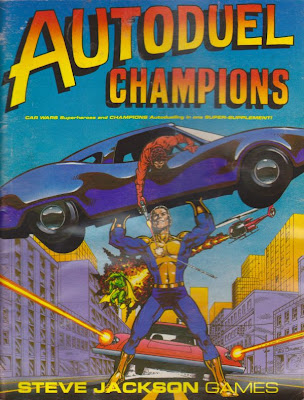
    An awesome supplement - we should have more books like this

    The most effective solution I have found for a board game is to make it a role-playing game. Playing 3055 era Mechwarrior in a vacuum is a very different experience from playing it as part of a mercenary unit that has to pay for all of that equipment - suddenly all those Gauss Rifles and Pulse Lasers disappear in favor of less efficent but cheaper weapons. Same with Car Wars - building a teched out Division 100 laser sled is fun and all, but if you have to fix it up after the battle you better hope there's enough prize money to make it worth your while. Start down at Division 5 or 10 and you have a lot more options and smaller repair bills.


    For RPG's the key is to make theoretical designs just that - theoretical. Want to multiclass from fighter into cleric then into rogue? Better find a temple that will have you and then a guild that will trust you too. Playing a dwarf and planning to take Deepwoods Sniper? That's kind of an Elf thing and you've been playing grumpy scottish tree-hugger-hating longbeard, so how exactly are you going to get in? Sure Frenzied Berserker is awesome but they're only found up amongst the Frost, Ice, and Snow Barbarians and we're adventuring down in the Amedio Jungle so how are you going to pick that up? We're playing in the Realms and you want to pull in a race from Eberron? No. Playing Fantasy Hero and you want your wizard to use a variable power pool for his magic? No, you're not Green Lantern.  Hardcore optimizers sneer at this kind of stuff but to me it's the difference between an RPG and a board game or card game  - the universe of all possibilities is a theoretical one, not one found in any particular campaign. In many ways RPG campaigns are defined by what subset of the game they embrace, not how many different books you can use to max out your damage bonus with the Impilturian Greatsword when fighting underground and wearing a holy symbol of Cyric..

    It's surprising how much of an RPG it turned into near the end
    As for Car Wars The militarization of the game was disappointing to me as originally this was a light, fast, interesting little tactical game with some roleplaying elements if you wanted them. I didn't need another game featuring tanks and SPA - I already had a ton of those! For me the game collapsed under its own weight about 1990 and I haven't played it in most of 20 years. However, the discussion and research on it has triggered some interest with me in going back to the basics. I really like the way everything is presented as an in-universe document, something we wouldn't see again until 1989 and Shadowrun. I think I'm going to get out the pocket box game with the apprentices and run a small arena fight and see what they think. All these years later I don't feel as compelled to use everything ever published for a game so we'll stick to the basics and spend an afternoon shooting holes in cars. Sounds like fun to me.

    Cars from the State Fair of Texas 2037 

    Motivational Monday